

Do you know that the equipment used for loading and unloading ships at ports determines how fast or slow goods are distributed? Without the right tools, containers can pile up and ships may wait for days. In this article, we’ll go through the most common stevedoring equipment one by one. Plus, at the end, I’ll show you how Agung Logistics can help streamline your logistics operations. Let’s dive in!
🏗️ Port Crane – The Giant Container Lifter
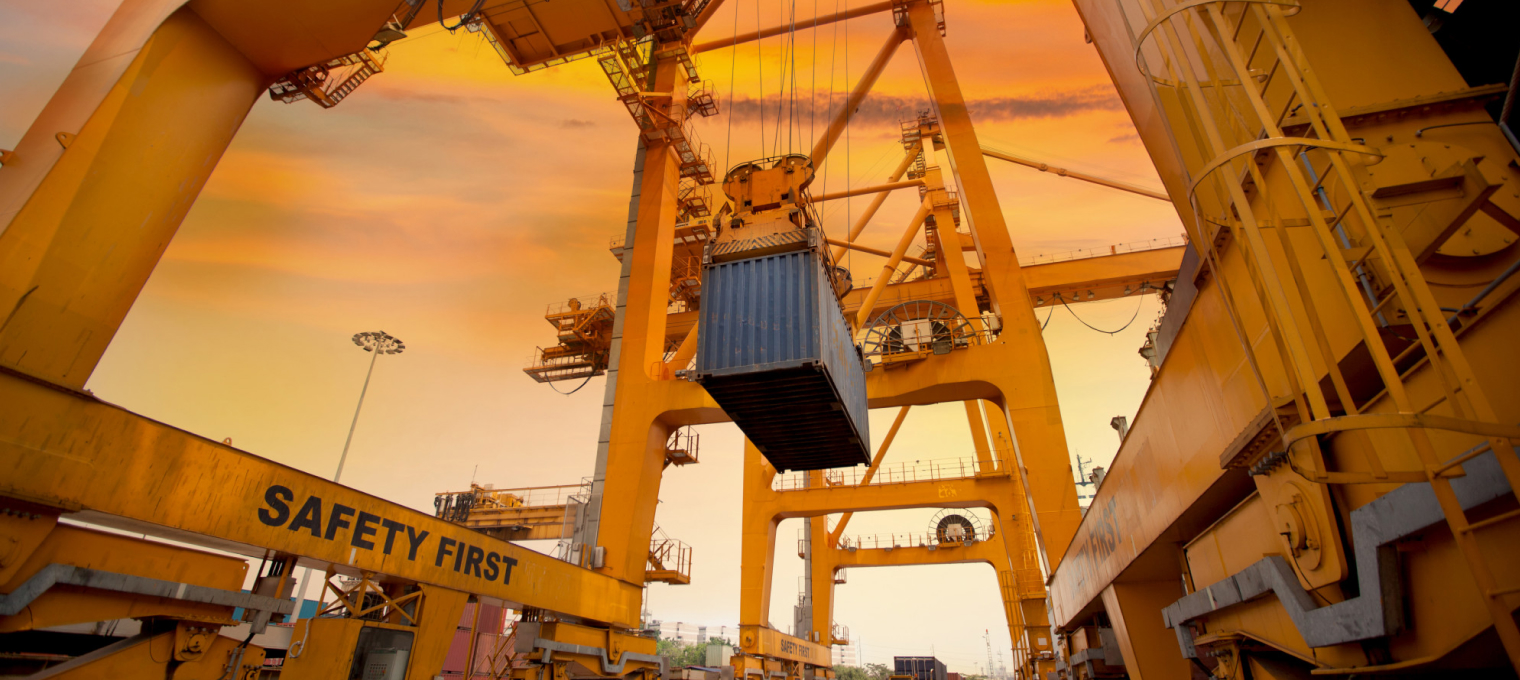
When we talk about equipment for loading and unloading ships, the first thing that comes to mind is the crane. Port cranes come in several types:
- Mobile crane – Flexible, can be moved between docks.
- Gantry crane – Double-legged, ideal for loading and unloading containers directly from ship to truck.
- Ship crane – Mounted on the vessel itself, very helpful when the port lacks shore cranes.
With lifting capacities of dozens of tons, cranes are the backbone of container handling. Imagine a 20-foot container lifted and placed with precision in just minutes.
🚜 Forklift & Reach Stacker – Workhorses for Cargo Movement
Besides cranes, the container forklift is the unsung hero. These large, solid-tyred forklifts can lift containers inside the terminal. Then there’s the reach stacker – a vehicle with a long arm that can stack containers up to 4–5 layers high.
Reach stackers are very agile at moving containers from the dock to the storage yard. This is a key part of material handling at ports that every terminal must have.
At Agung Logistics, we understand how crucial equipment efficiency is. If you need our loading and unloading services, our team is ready to manage the stevedoring process with the best tools.
⚙️ Conveyor Belt – Solution for Bulk Cargo
For commodities like coal, cement, or grains, the conveyor belt for loading is the answer. This equipment moves bulk material directly from the ship’s hold onto trucks or into warehouses. The process is fast, produces minimal dust, and requires less manual labour.
Conveyor belts also reduce spillage, minimising material loss.
🦀 Grab Bucket – Fast for Coal & Sand
A grab bucket looks like a giant crab scooping up cargo. It is attached to the tip of a crane. How it works: it is dropped into the hold, grabs the material, then lifts and dumps it into a hopper or truck.
Very efficient for coal, sand, or mineral ores. In one single grab, it can move several tons of material.
🧲 Vacuum Lifter – Safe Tech for Sensitive Goods
Ever seen a giant suction device? That’s the vacuum lifter. It is used to move goods that cannot be scratched or broken, such as steel sheets, glass, or high-tech packaging.
The vacuum lifter works using air pressure. Without rough physical contact, goods remain safe. This technology is becoming increasingly popular at modern ports.
⛴️ Tugboat & Trailer – Distribution on Water and Land
After cargo is unloaded from the ship, the journey isn’t over. In the port’s water area, tugboats help large vessels dock. Meanwhile on land, trailers or container trucks will transport the cargo to warehouses or factories.
All these tools must be well coordinated. And this is where a logistics company like Agung Logistics becomes crucial. We not only provide equipment but also integrated supply chain management.
📦 Conclusion
Those are 10 types of equipment used for loading and unloading ships at ports. From cranes, forklifts, reach stackers, conveyor belts, grab buckets, vacuum lifters, to tugboats and trailers. Each has a specific role to ensure goods arrive quickly and safely.
➡️ Get a free consultation with the Agung Logistics team today. Click our contact page or view our full services on this website.
Choose the Right Equipment, Leave Your Logistics to the Experts
don’t hesitate to use freight forwarding services from Agung Logistics. We have the team and network to help smooth out your operations.


