
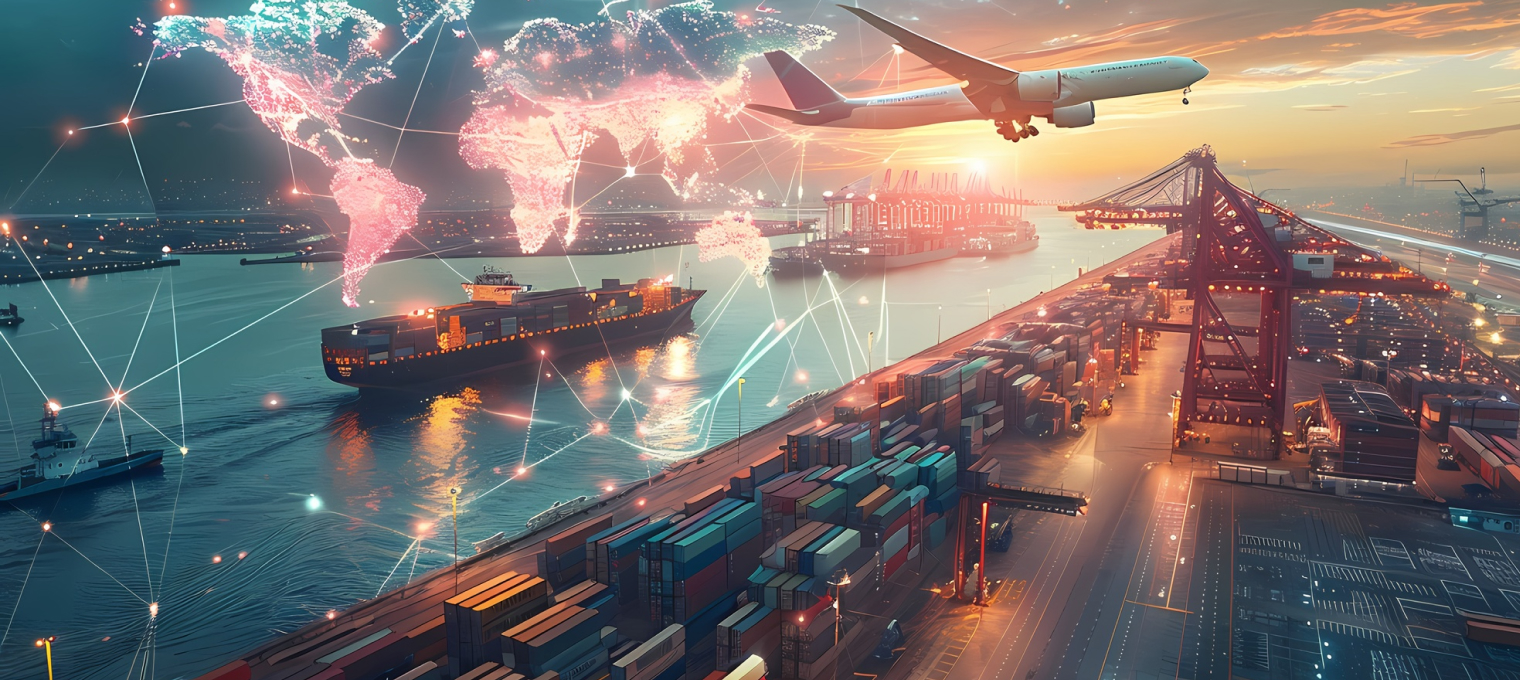

Have you ever felt that the world of logistics and supply chains is changing faster than ever? Geopolitics, technological advancements, and increasingly eco-conscious consumer demands are reshaping the global landscape. To remain competitive in 2025, understanding trends is no longer an option—it’s a necessity. In this article, we’ll explore three major global logistics trends set to dominate in 2025: digitalization, resilience, and sustainability. Let’s dive in!
Digitalization: When Logistics Becomes “Smart”
In the past, logistics was synonymous with piles of paperwork and endless phone calls. Today, everything is transformed by digitalization. This global logistics trend for 2025 leverages the power of data and automation to create operations that are more efficient, accurate, and fast.
- AI & Big Data: The Eyes and Brain Behind Operations
Imagine being able to predict market demand with precision, know exactly where your goods are at any given moment, and optimize delivery routes to avoid congestion. That’s what Artificial Intelligence (AI) and Big Data do. These technologies provide full supply chain visibility, cut hidden costs, and satisfy consumers who demand transparency. At Agung Logistics, our real-time tracking system utilizes this data to give you peace of mind, as you can monitor every movement of your goods. - Blockchain: The Guardian of Trust in Every Transaction
In a world full of complex documentation, blockchain emerges as a game-changer. It creates a decentralized and immutable ledger for every transaction. What does this mean? Documents such as Bills of Lading or certificates of origin become more secure, reducing fraud risks and significantly speeding up processes. This is a giant leap toward truly transparent digital logistics.
Resilience: Ready to Face Storms of Uncertainty
The pandemic and global conflicts have taught us one valuable lesson: rigid supply chains are highly vulnerable to collapse. In 2025, building supply chain resilience is a top priority.
This means shifting from a linear model that depends on a single supplier or route to a networked system. Diversification is key. Moreover, the role of modern warehouse management is becoming increasingly crucial. Warehouses are no longer just storage facilities but flexible, strategic distribution centers designed to anticipate disruptions. By spreading inventory across strategic locations—just like the storage and warehousing solutions we provide—risks of disruption can be dramatically reduced.
Sustainability: Green is Profitable
Sustainability in logistics is no longer just a CSR slogan. It is a market demand and a commitment to a better future. Consumers and investors are now more likely to support brands that care for the environment.
- Green Transport: Reducing the Carbon Footprint
Decarbonization is the keyword. The logistics sector is moving quickly to adopt eco-friendly practices, from electric vehicles and biofuels to load and route optimization that minimizes carbon emissions. Every efficiency step in our sea and air freight operations not only saves costs but also helps protect the planet. - Circular Economy: Turning Waste into Value
This trend also involves reducing waste through recyclable and reusable packaging. The circular economy model—where products are designed to be returned and refurbished—is gaining traction, creating new, more sustainable value chains.
Get Ready for the Future, with Agung Logistics
Agung Logistics stands as your strategic partner, offering end-to-end services supported by technology and dedicated to building resilient and environmentally conscious supply chains.


