
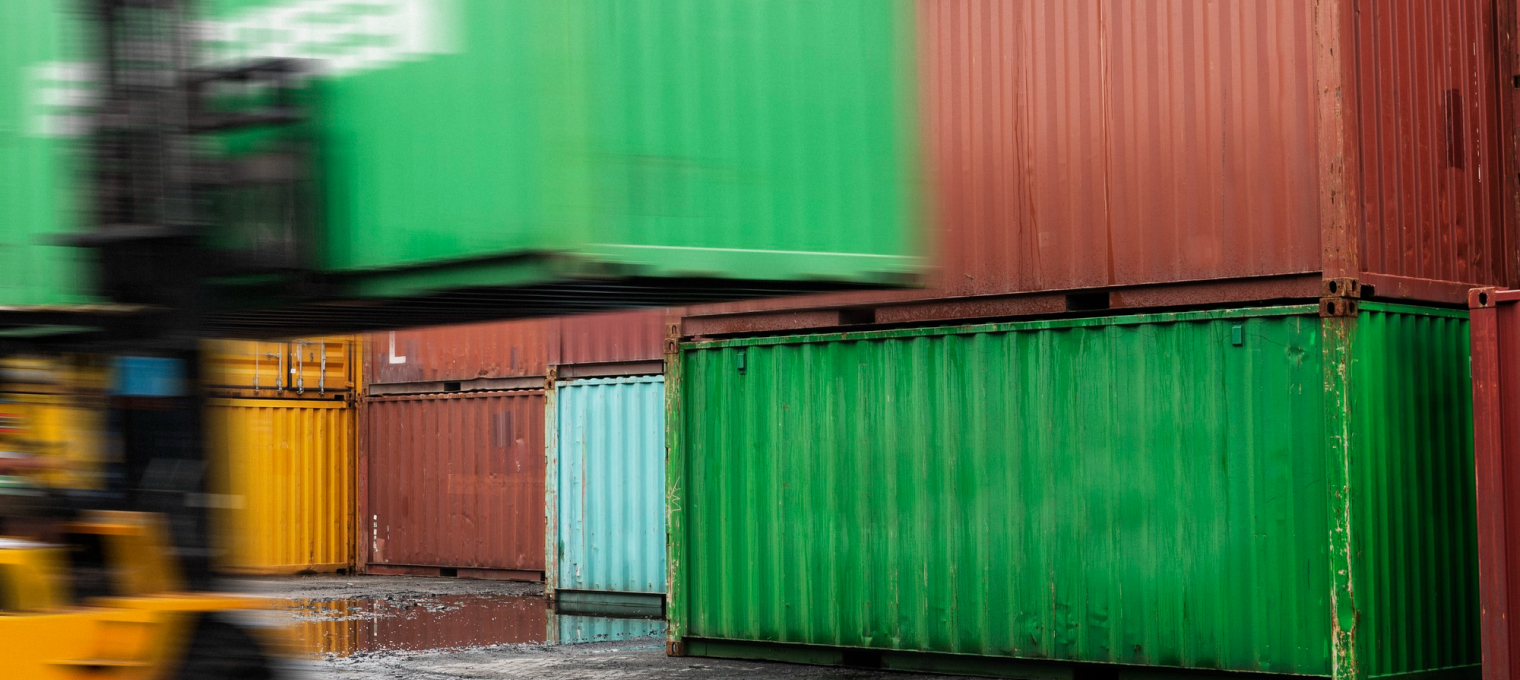

Have you ever seen stacks of giant, colorful “metal boxes” at a port or passing by on a container truck on the highway? Those boxes are not just scrap metal. They are the unsung heroes of the logistics and cargo transport world, making it possible for you to receive packages from abroad or ship your business products across the country.
But, what exactly is a shipping container? More than just a box, it is a global standard that revolutionized the way we trade. In this article, we will thoroughly explore its definition, types, sizes, and why it is so vital. Keep reading until the end!
Getting to Know It: What Exactly Is a Shipping Container?
Simply put, a shipping container is a freight container specially designed with strength and international standards to store and transport goods. Before the container era, loading and unloading were done piece by piece (break bulk), which took days and was prone to damage or theft.
The emergence of containers in the mid-20th century changed everything. Now, goods are simply loaded into a container, sealed, and can be moved from the factory to a truck, to a ship, to a train, without ever touching the contents. This is what we call efficiency.
Its main functions are:
- Protecting Goods: From hot weather, rain, dust, and impacts during transit.
- Facilitating Transport: Its standardized size makes it easy to transport via various modes (truck, ship, train).
- Time and Cost Efficiency: The loading and unloading process becomes very fast.
At Agung Logistics, we understand the importance of using the right container to ensure your goods arrive in perfect condition. We provide various container options to support the smooth running of your cargo transport.
Types of Containers Based on Shipping Needs
Not all goods can go into the same type of container. Here are some common types used in the logistics industry:
Dry Storage Containers (General Purpose)
This is the type you see most often. It’s shaped like a tightly sealed box. Suitable for transporting dry goods like cartons, pallets, furniture, electronics, and other manufactured products. Available in 20ft and 40ft sizes.
Reefer Containers (Refrigerated)
Need to send frozen products like ice cream, meat, fish, or even pharmaceuticals that are temperature-sensitive? A Reefer Container is the answer. Equipped with an integrated refrigeration system, it maintains a stable temperature during long journeys.
Flat Rack Containers
For heavy cargo like industrial machinery, large vehicles (cars, heavy equipment), or construction materials that don’t fit in a standard container, a Flat Rack is the choice. These containers have no side walls and no roof, only a sturdy floor and short header ends.
Open Top Containers
Similar to a Dry Container, but the top is open and can be covered with a tarpaulin. Suitable for goods that are too tall (overheight) to enter through a standard door. Commonly used for transporting large machinery or pipes.
Tank Containers
Specifically designed to transport liquids in bulk, such as chemicals, oils, or liquid food products.
Standard Container Sizes You Need to Know
Besides the type, size is also important. In the shipping world, we often hear terms like 20ft, 40ft, and TEU. TEU stands for Twenty-foot Equivalent Unit, which is the benchmark for a ship’s capacity.
- 20-Foot Container:
- External Dimensions: Length 6.058 m, Width 2.438 m, Height 2.591 m.
- Maximum Payload: around 28 tons (depending on the type of goods).
- Suitable for dense but heavy cargo, like cement, rice, or metal ores.
- 40-Foot Container:
- External Dimensions: Length 12.192 m, Width 2.438 m, Height 2.591 m.
- Payload Capacity: around 26-28 tons.
- Suitable for light but voluminous cargo, like footwear, clothing, or furniture.
- 40-Foot High Cube Container (40HC):
- Same as the 40ft, but 30 cm taller (Height 2.896 m). This provides extra space inside, ideal for high-volume but lightweight goods.
Why Containers Are the Star of Modern Logistics
Containers are more than just boxes; they are an innovation that made freight shipping massively efficient.
- Guaranteed Security: Once sealed, a container is very difficult to break into. This minimizes the risk of theft.
- Multi-modal Transport: This is the biggest advantage. Containers can be moved from a truck to a ship without needing to reload the contents, saving days of time.
- Cost Effectiveness: Because the loading and unloading process is fast and safe, insurance and overall logistics costs become cheaper.
By understanding the characteristics of containers, you can plan a more effective and efficient logistics strategy. And for this, you need the right partner.
Need Reliable Container Shipping Services?
Now, after understanding the ins and outs of containers, the next question is: who will handle everything?
Agung Logistics is here as a trusted logistics solution for all your shipping needs. We don’t just provide containers; we manage the entire shipping process safely and on time. From domestic inter-island shipping to international shipping (export-import), our team is ready to assist.
We will help you determine the most suitable type of container for your goods’ characteristics, handle the documentation, and ensure your cargo arrives safely at its destination. Don’t let the complexity of logistics hinder your business.
Confused about where to start?
Contact the Agung Logistics team now for a free consultation! Our professional team is ready to provide the best solutions for your business continuity.


